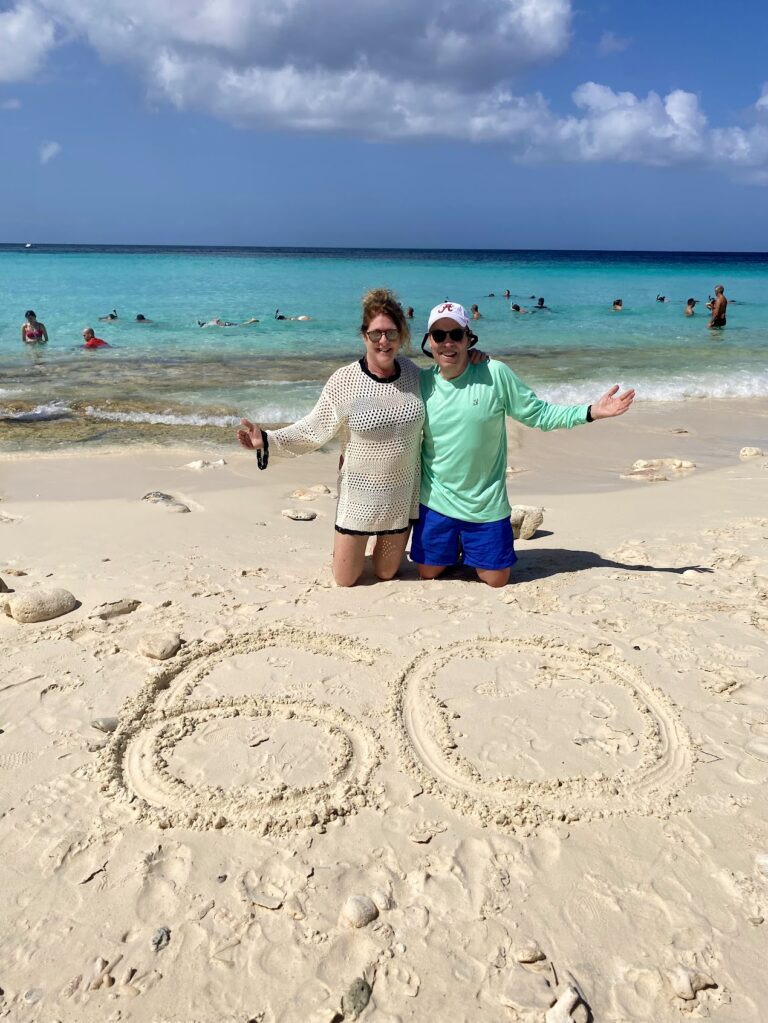
We were searching for the perfect destination to celebrate a milestone birthday – somewhere warm, beachy, and full of turquoise waters. Curaçao immediately caught our eye, partly because Kansas City is hosting one of their World Cup matches this summer, and partly because the videos online made the island look absolutely breathtaking. One click led to another, and suddenly we were sold.
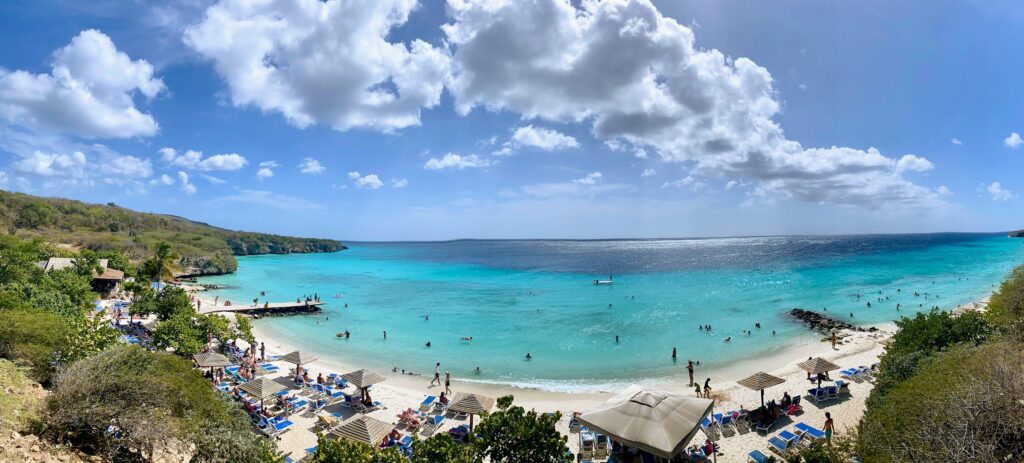
Curaçao is a small Dutch island in the southern Caribbean, just north of Venezuela. It’s part of the ABC islands, known for their amazing snorkeling and scuba diving thanks to clear waters and vibrant reefs. We noticed Dutch being spoken quite a bit alongside Papiamentu and English, which gave the island a unique European-Caribbean vibe. The mix of languages, culture, and colorful architecture makes it feel lively and charming.
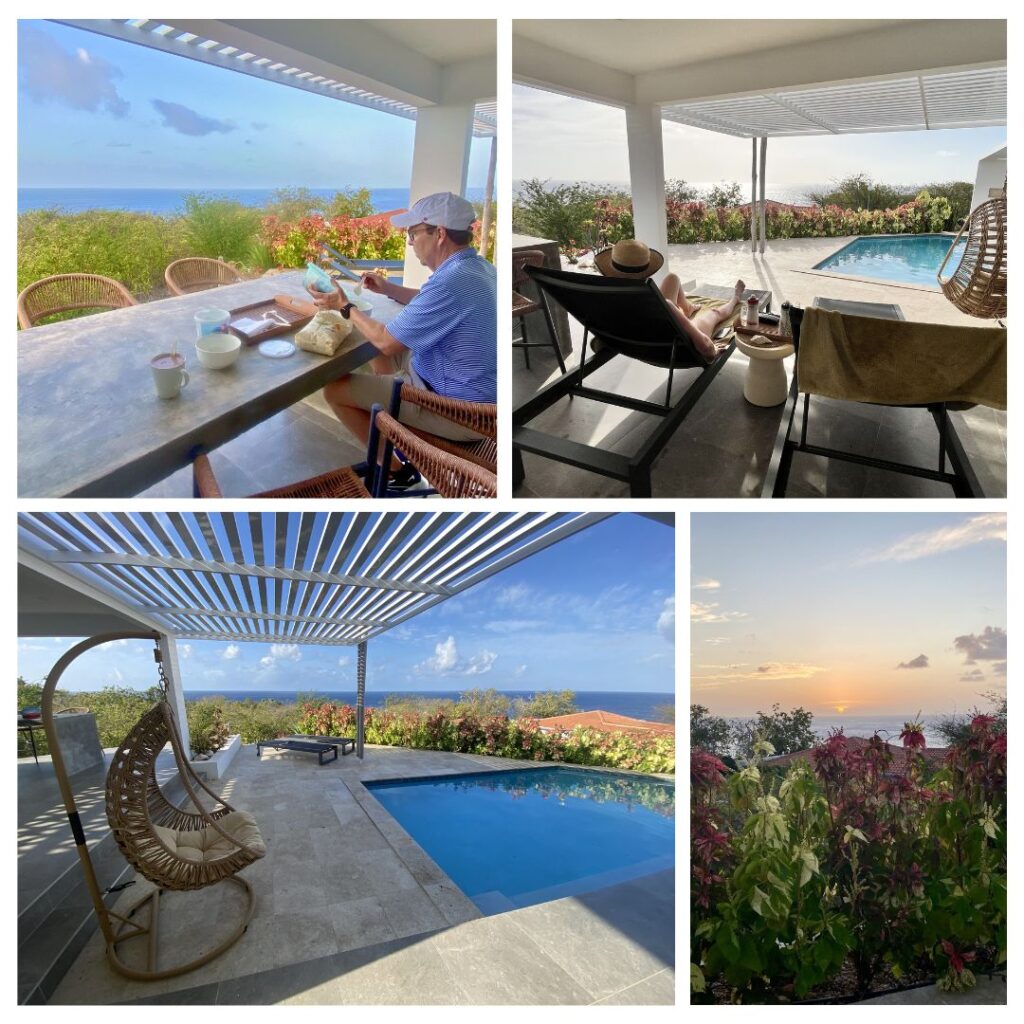
The island offers a range of places to stay, from resorts and hotels to Airbnbs, either in the lively capital, Willemstad, or in quieter, rural areas. For our trip, we chose a villa at Coral Estate on the northern west coast – a secluded spot with its own private pool, perched on a hill overlooking the ocean. Mornings were blissful, starting with breakfast by the pool. Picnic lunches followed on beach days, and evenings were spent sipping drinks poolside before heading out for dinner. Initially, we’d planned five nights, but it quickly became clear that wasn’t enough. We added a night at a boutique hotel in Willemstad’s Pietermaai district, giving us a total of six nights – the perfect balance of city and villa life.
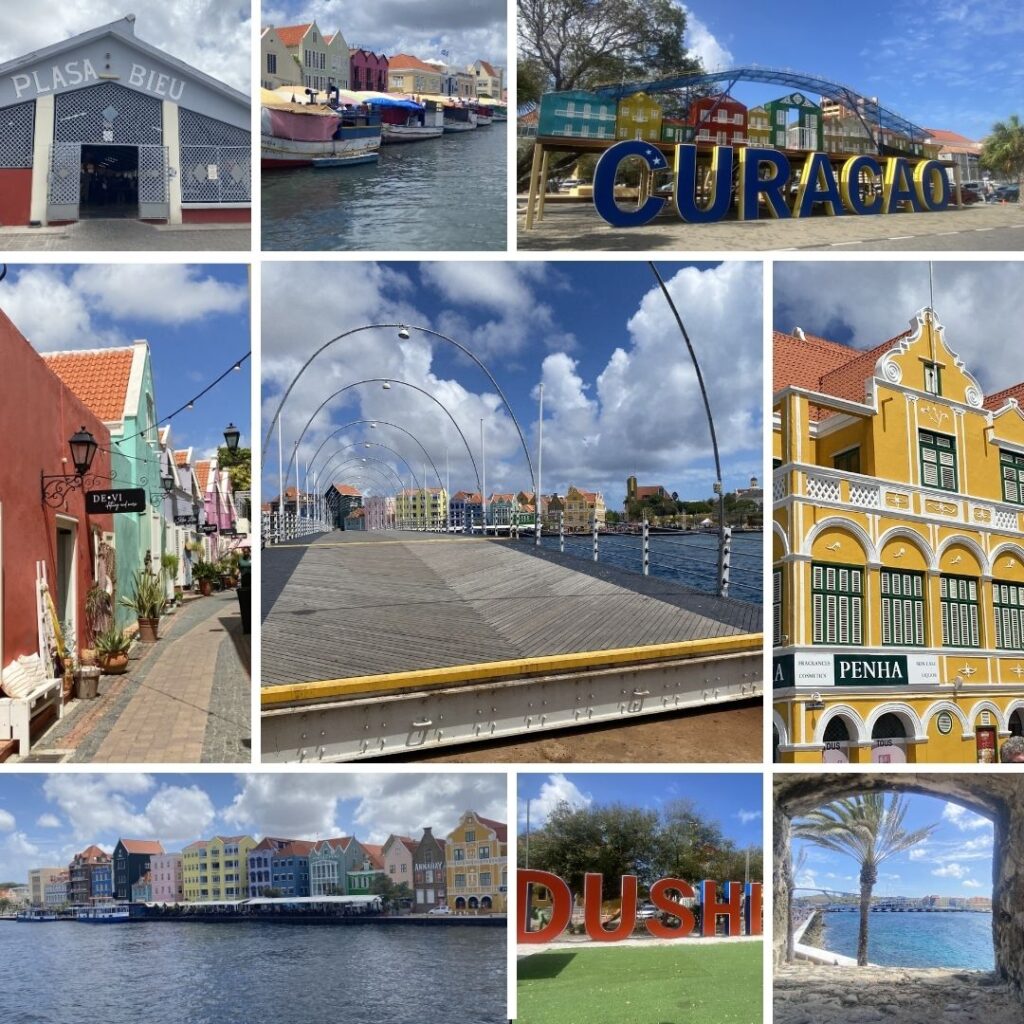
Willemstad is a feast for the eyes and the senses. Handelskade, with its row of pastel gabled buildings along the waterfront, instantly evokes Amsterdam. The Queen Emma Bridge, affectionately called the “Swinging Old Lady,” is a floating bridge connecting the Punda and Otrobanda districts over St. Anna Bay. When it opens for passing boats, a ferry takes passengers across. At night, the buildings and bridge light up in a dazzling display of color – magical!
The floating market on the Punda side is worth a stroll. Boats from Venezuela deliver fresh fruits and vegetables, while the colorful stands line the street. And of course, we had to snap a photo in front of the large Curaçao and “Dushi” signs – “dushi” being a local term of endearment meaning sweet or nice. We almost bought a T-shirt that read “I’m super dushi,” but decided it would likely stay in the closet back home.
For a taste of local cuisine, Plaza Bieu is a must. This food hall serves traditional dishes like fresh fish, goat, and even iguana stew, all at communal tables. On the Otrobanda side, history and charm abound. Rif Fort has shops and restaurants, and walking to the top offers a glimpse of the old fortifications. Nearby, Kirá Hulanda Village features restored 18th- and 19th-century buildings and small museums, perfect for wandering. Tours are plentiful: a free 2.5-hour walking tour, a trolley train, or a colorful school bus from Rif Fort. We chose to explore at our own pace, soaking it all in.
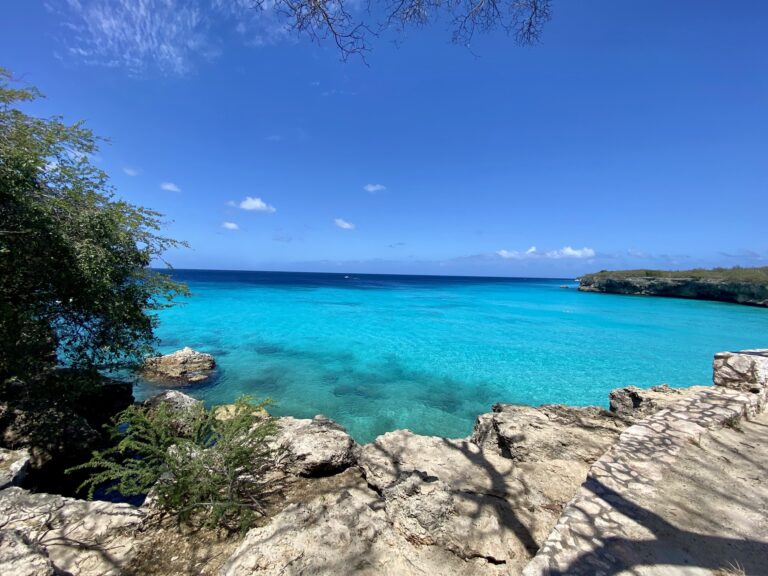
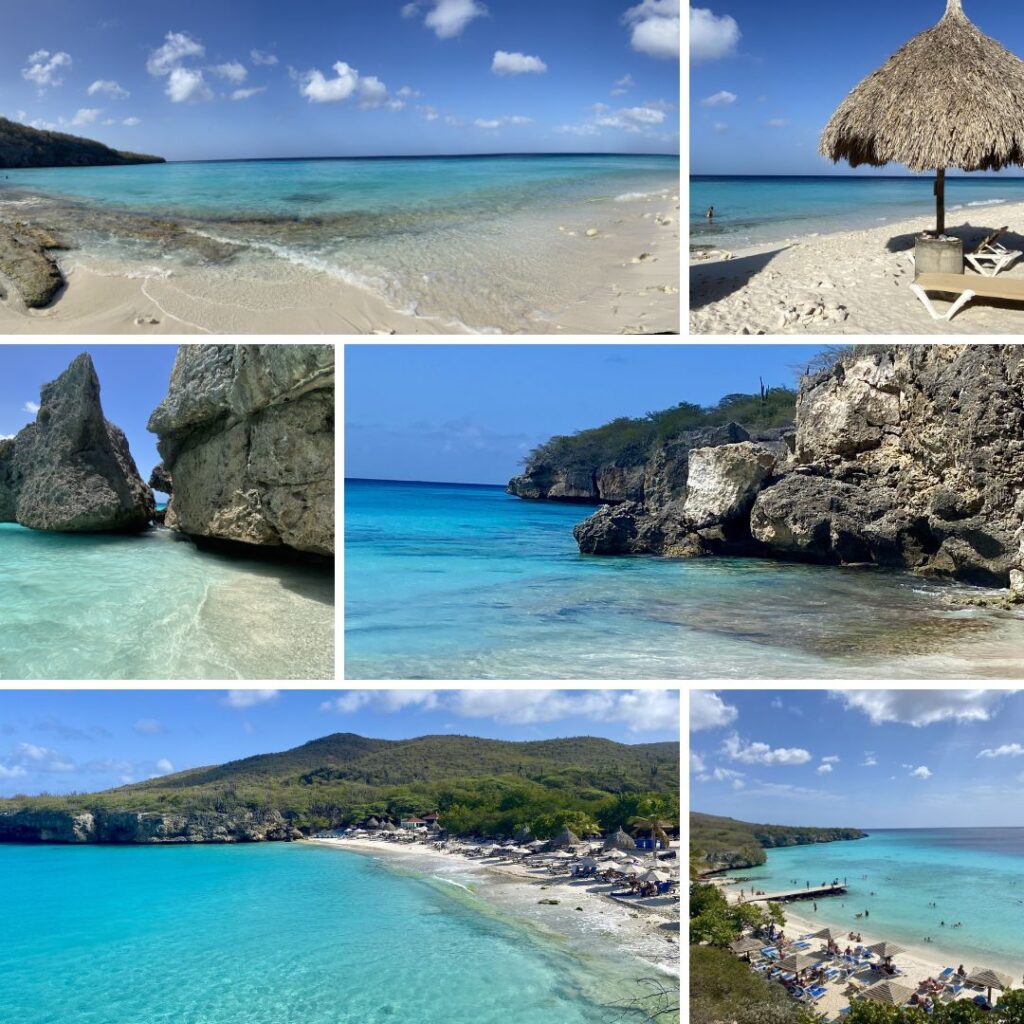
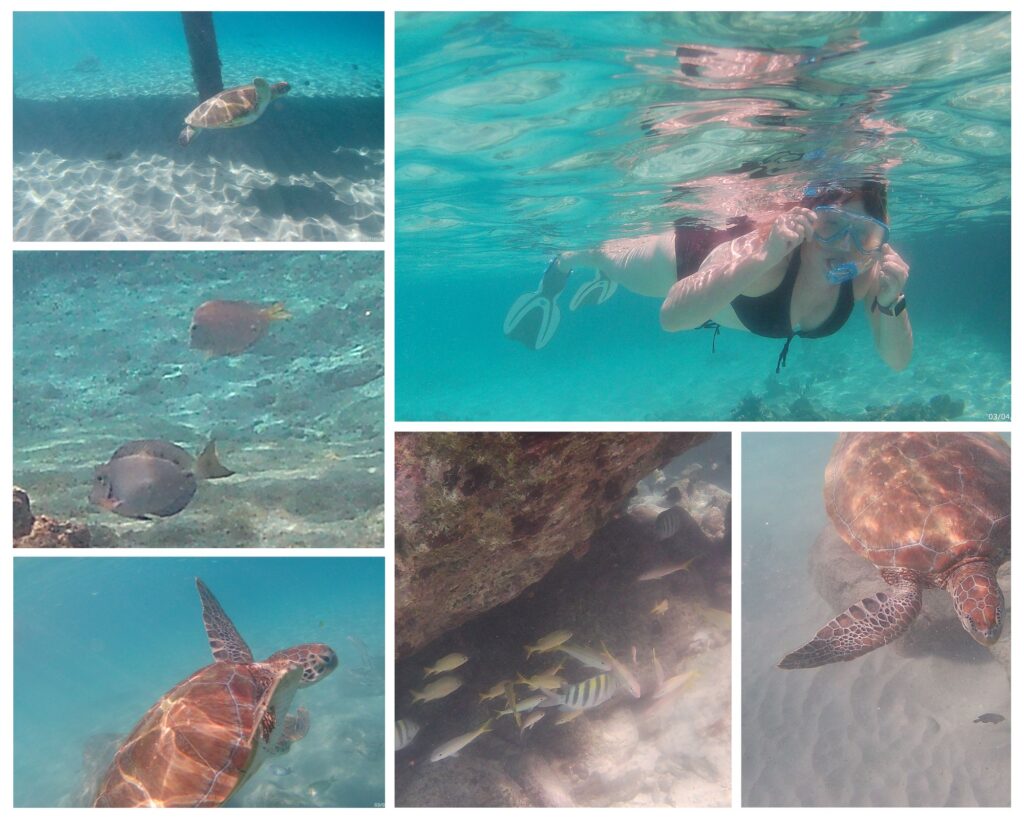
Back at our villa, life was wonderfully slow. Breakfast by the pool, followed by beach hopping, became our daily rhythm. Curaçao has 38 officially recognized beaches, all located on the west side of the island, each with its own charm. The beaches are mostly small, horseshoe-shaped coves with crystal-clear turquoise waters and excellent snorkeling. Most offer chair and umbrella rentals, small food stands, and a little privacy if you arrive early. Some are more secluded, while others attract families and day-trippers, so planning your day and arriving early is key. It was amazing to explore so many different beaches – each one felt like a hidden gem, with something unique to offer.
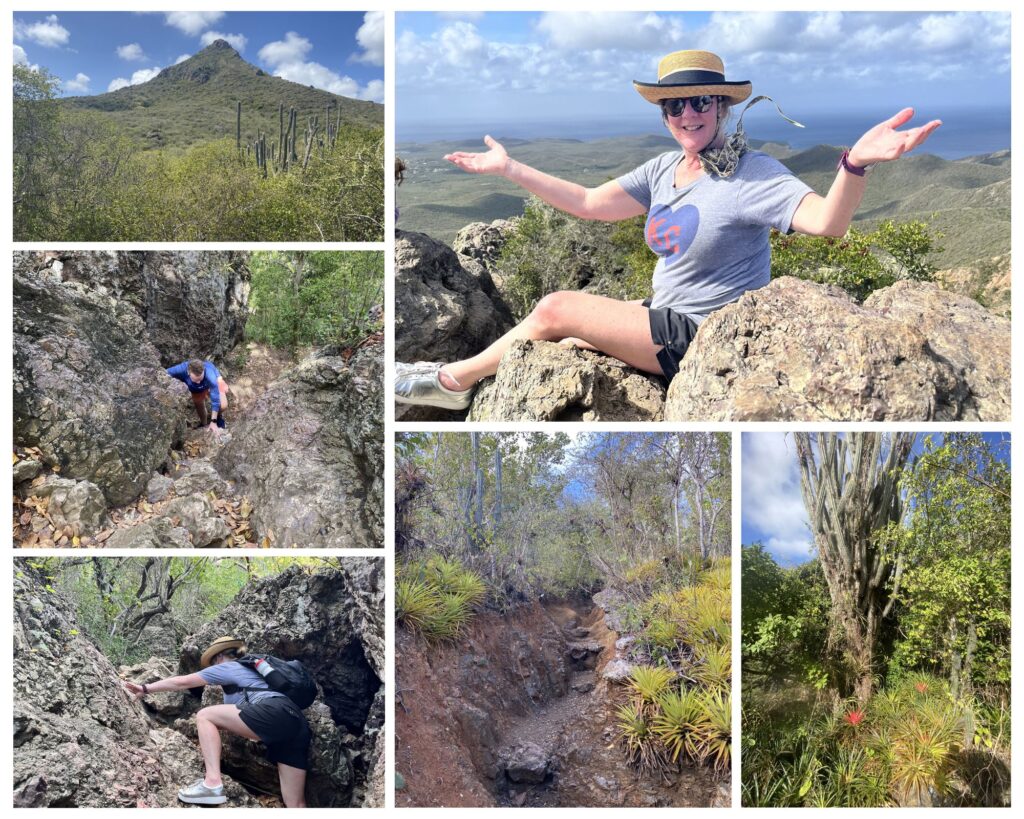
One morning, we set off early for Christoffel National Park to climb Mount Christoffel, the island’s highest point. The trail starts as a dirt path through cactus and desert-like scenery, eventually giving way to rocky scrambling near the top. The effort is more than worth it – the views from the summit are incredible, stretching across the island and beyond.
Another highlight was visiting the Hato Caves, just across from the airport. The caves are filled with dramatic stalactites and stalagmites, creating a stunning natural landscape to explore. Historically, they also served as a hiding place for enslaved people seeking refuge during colonial times, as well as a shelter during pirate raids. It’s a perfect stop before an afternoon flight, and walking among the formations while imagining the history that unfolded here made the visit both fascinating and memorable.
We also visited the Curaçao Liqueur Distillery at Landhuis Chobolobo, the island’s historic distillery and the only producer of authentic Genuine Curaçao Liqueur. While we didn’t take a full tour, the tasting was unforgettable – the liqueur’s bright, zesty flavor comes from the Laraha orange, a bitter variety that developed on the island from Seville oranges brought by Spanish explorers. The fruit itself isn’t edible, but its aromatic peel gives the liqueur its signature taste. We learned a bit of history, too: Chobolobo has been producing this iconic liqueur for generations, but because the name “Curaçao” refers to the island itself, they couldn’t patent it, which has allowed copycats around the world. Tasting the original at its historic home felt like sipping a true piece of Curaçao heritage.
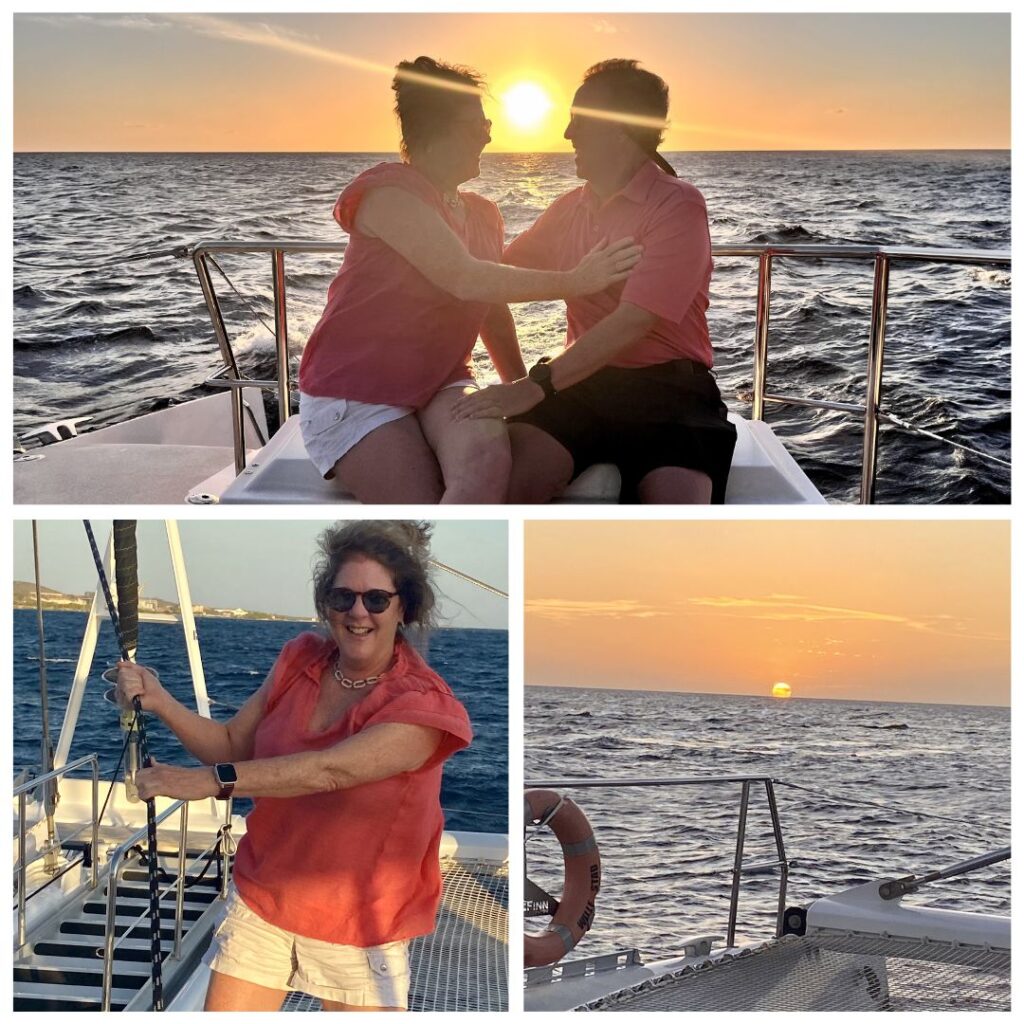
To cap off our trip, we booked a catamaran sunset tour on our final night. Sailing along the coastline at golden hour was magical, with the warm glow reflecting off the turquoise waters. We explored parts of the island we would never have seen from land – quiet coves, hidden beaches, and impressive homes – all while enjoying the calm rhythm of the sea. Watching the sun dip below the horizon from the deck of the catamaran was the perfect way to end our Curaçao adventure.
We loved almost every meal, though service varied from attentive to a little slow. Plan ahead and don’t linger too long when ordering. Curaçao’s climate doesn’t allow for much farming, so most fruits and vegetables are imported, though there are some hydroponic farms. Local staples include mangoes and coconuts, which are abundant and delicious.
A few practical tips: the official currency is the Netherlands Antillean Guilder, but US dollars are accepted almost everywhere. Renting a car is essential if you want to explore multiple beaches and sights, as taxis are expensive and inflexible. Electricity is compatible with both American and European plugs. Weather is consistently warm, with highs around 83°F, lows around 78°F, plenty of humidity, and intense sun. Rain is brief and mostly falls during the October–December rainy season.
Packing essentials for Curaçao include: snorkeling gear, beach shoes, sunscreen, lip balm with SPF, a hat, a beach bag, a thin beach towel, clips for beach chairs, a collapsible cooler, an underwater camera, a refillable water bottle, insect repellent, light cover-ups for the beach, sunglasses, and a few $1 bills for small purchases or beach fees. Don’t worry about what to wear – life here is casual. Most days, swimwear with a cover-up was perfectly fine. Mosquitos were minimal, and the water is safe to drink.
Curaçao is a mix of relaxing beaches, vibrant culture, and a hint of adventure. Whether wandering Willemstad’s colorful streets, snorkeling in pristine coves, climbing the island’s highest peak, exploring the Hato Caves, tasting the famous blue Curaçao at Landhuis Chobolobo, or sailing along the coast at sunset, every day brought a new experience. If you’re looking for a tropical getaway with charm, color, and adventure, Curaçao should definitely be on your list.